Ukraine considers matter closed, but Seoul maintains demand for apology as ambassador's return remains uncertain
South Korea is seeking a diplomatic way out of a dispute over Kyiv's unilateral disclosure of the transfer of two North Korean prisoners of war to Seoul, even as the two sides remain at odds over South Korea's demand for a formal apology.
The diplomatic standoff has entered a new phase following Ukraine's characterization of the controversy as a closed matter and South Korea's decision to recall its ambassador to Kyiv for consultations, raising questions about what concessions could pave the way for restoring normal diplomatic engagement.
Ukrainian Foreign Minister Andrii Sybiha said in an interview with RBC-Ukraine on Monday that the dispute stemmed from differing interpretations of confidentiality arrangements during the prisoners' transfer, insisting that Kyiv had fulfilled all its obligations.
"We consider the matter closed," Sybiha said.
His remarks suggested that Kyiv considers the controversy resolved, despite Seoul's continued insistence that Ukraine provide a formal explanation, an apology and assurances against a recurrence.
A South Korean Foreign Ministry official, however, said the two governments remained in communication to find an amicable resolution.
"We do not know exactly what he meant by calling it a closed issue or the circumstances behind the remark, but what is clear is that we remain in communication to find an amicable resolution," the official, declining to be named, told reporters on Thursday.
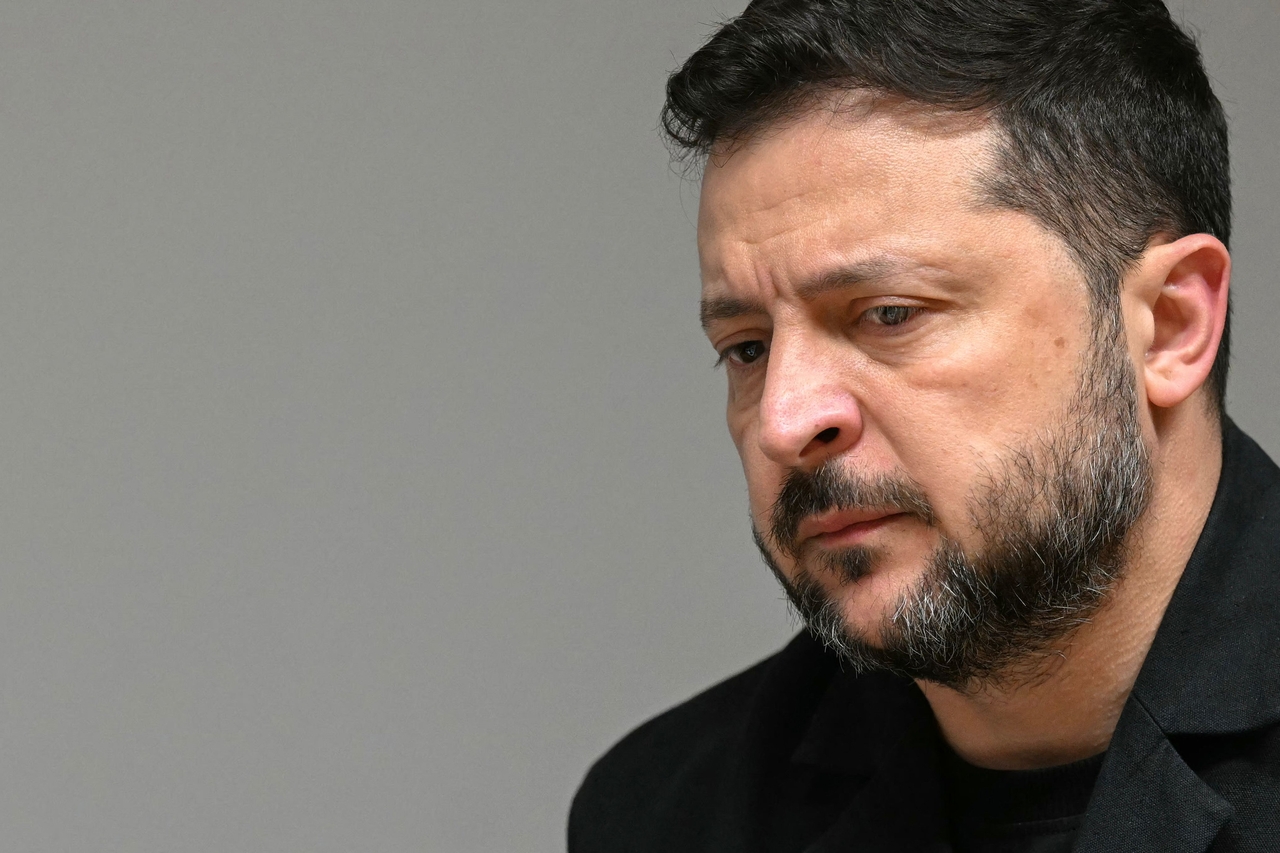
Seoul has maintained that Ukraine violated a bilateral understanding to keep the transfer confidential when President Volodymyr Zelenskyy disclosed the prisoners' arrival in South Korea during his Sept. 23 address to the United Nations General Assembly.
Ukraine's presidential office subsequently rejected Seoul's account, denying that the two governments had agreed to maintain secrecy over the transfer.
The conflicting accounts prompted a sharp response from President Lee Jae Myung, who warned on Oct. 2 that South Korea could take additional measures unless Kyiv issued a public apology.
On Oct. 10, Seoul recalled Ambassador to Ukraine Park Ki-chang for consultations, further escalating the diplomatic dispute.
Attention is now turning to the conditions under which Park might return to Kyiv, particularly as the two governments are understood to share an interest in preventing the dispute from dragging on.
The situation has drawn comparisons with South Korea's temporary recall of its ambassador to Japan during a diplomatic dispute over Dokdo in 2008, when Seoul protested Tokyo's decision to include its territorial claim over the South Korean-controlled islets in official teaching guidelines for middle school students.
Then-Ambassador Kwon Chul-hyun returned to Tokyo 21 days later, despite Japan neither withdrawing its claim nor issuing an apology. Seoul justified his return on the grounds that consultations with government officials had been completed, while maintaining its objections to Japan's territorial claims.
According to observers, however, the current standoff with Ukraine differs in one significant respect: Seoul has explicitly linked consideration of its ambassador's return to an explanation and apology from Kyiv.
Whether Ukraine can offer additional assurances or communicate its position in terms acceptable to Seoul could therefore prove crucial to resolving the impasse.
A South Korean official suggested that the government remained open to different forms of apology, saying Seoul hoped Kyiv would communicate its position in a manner the South Korean public could accept.
Foreign Minister Cho Hyun previously acknowledged receiving a message from Ukraine that included an apology but said it fell short of the level Seoul had expected.
The remarks have fueled speculation that the two governments could seek a compromise over the wording or form of an apology, potentially through diplomatic channels rather than a public statement.
The controversy has also raised questions about why Seoul has reacted so strongly to the disclosure.
Victor Cha, Korea Chair at the Washington-based Center for Strategic and International Studies, suggested Thursday that South Korea's response reflected its complicated long-term strategic interests involving Russia.
Speaking during a CSIS discussion, Cha noted that while Seoul had indirectly supported Ukraine, it also had economic and strategic reasons to preserve the possibility of restoring relations with Moscow in the future.
He pointed to South Korean business interests in Russia and the country's need to diversify energy supply routes amid disruptions in the Strait of Hormuz, arguing that maintaining workable relations with Moscow could remain important in the longer term.
Cha also suggested that Ukraine might have viewed the disclosure as a form of psychological warfare against North Korea, without fully accounting for Seoul's broader diplomatic calculations.
Another CSIS expert, Sydney Seiler, a former US intelligence official, raised the possibility that the controversy could have complicated Seoul's efforts to facilitate renewed dialogue between Washington and Pyongyang.
Seiler speculated that South Korea might have sought to avoid publicizing the transfer to prevent political repercussions in North Korea, particularly as US President Donald Trump has expressed interest in resuming direct talks with North Korean leader Kim Jong-un.
The transfer of North Korean soldiers captured while fighting alongside Russian forces to South Korea could be politically sensitive for Pyongyang, potentially undermining its portrayal of the soldiers' wartime service.
However, Seiler's suggestion that Seoul might have communicated with Pyongyang about the transfer remains speculative, with no public confirmation from the South Korean government.
Meanwhile, a report released Friday by the government-funded Korea Institute for National Unification offered a legal perspective on the prisoners' transfer, arguing that it fulfilled both international human rights protections and South Korea's domestic responsibilities toward North Korean nationals.
Kim Tae-won, an associate research fellow at the institute, said the transfer was consistent with the international legal principle of non-refoulement, which prohibits returning individuals to countries where they face a substantial risk of torture or other serious human rights violations.
He also pointed to South Korea's constitutional framework, under which North Korean residents are regarded as South Korean nationals, and domestic legislation governing the protection and settlement of North Korean defectors.
Kim cautioned, however, that the prohibition against returning prisoners to a place where they could face serious harm did not automatically require Ukraine to transfer them specifically to South Korea.
He emphasized the importance of protecting the prisoners' identities and ensuring their physical and psychological recovery, while taking into account the safety of family members remaining in North Korea.
"The protective purpose of their transfer to South Korea can be more fully realized by going beyond preventing their return to danger and helping them rebuild their lives in safety," Kim said in the report.
mkjung@heraldcorp.com

![[Graphic News] Seoul rises to 7th in global financial hub ranking](https://wimg.heraldcorp.com/news/cms/2026/10/15/news-p.v1.20261015.d4dd881eab584b4e8ce6ec52a672b278_T1.gif?type=h&h=800)